
Recent post
1947 Penny Value Depends on More Than Age
Color, strike quality, and mint origin often matter far more than collectors expect.
High mintage numbers typically keep the market 1947 penny value low for circulated examples.
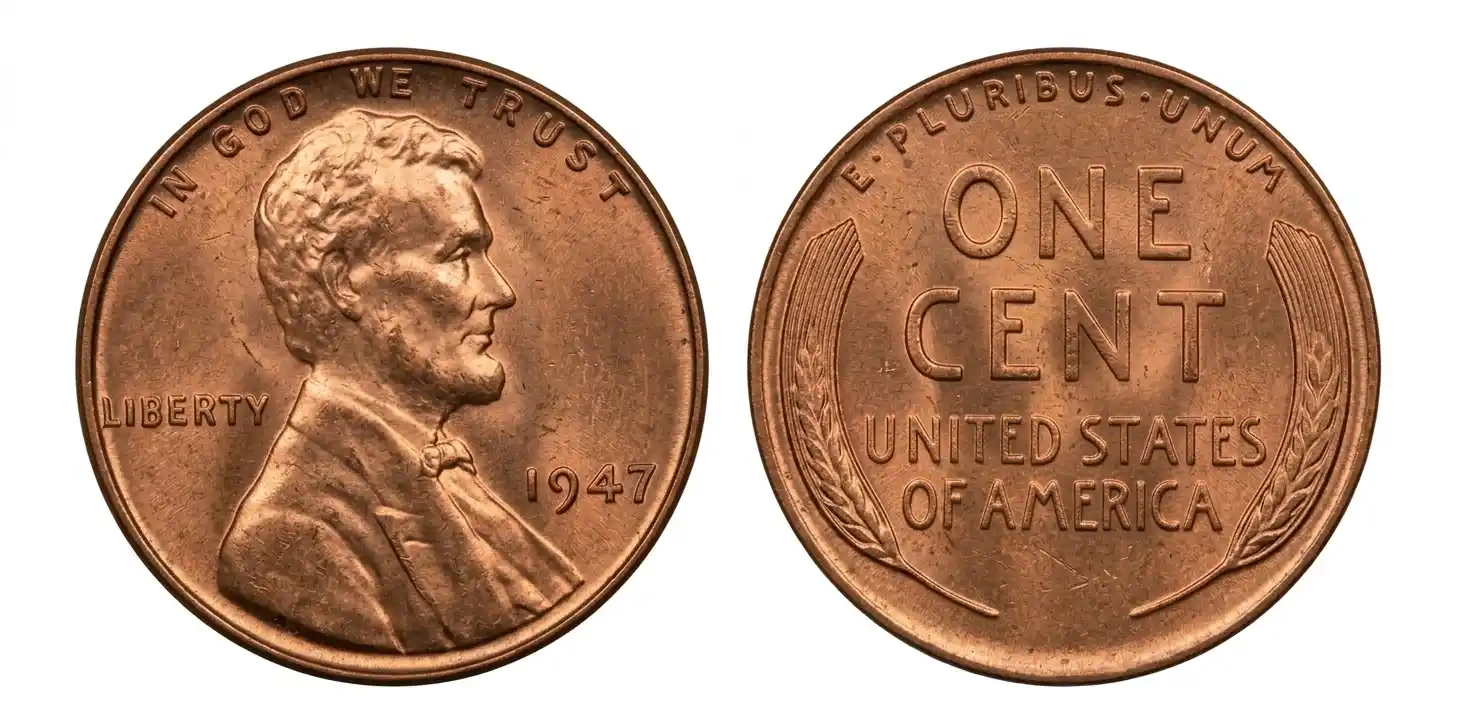
Physical Metric | Technical Specification |
Total Mass | 3.11 grams |
Exterior Diameter | 19.05 millimeters |
Edge Thickness | 1.55 millimeters |
Copper Proportion | 95% |
Tin and Zinc Proportion | 5% |
Edge Surface | Plain |
Total Production Volume Across Facilities
Three separate locations handled the striking of these units throughout the calendar period.
Total output for 1947 reached 484,486,000 pieces.
Economic requirements in different regions determined the specific mintage numbers for each branch.
Philadelphia Mint → 190,736,000 units
Denver Mint → 194,750,000 units
San Francisco Mint → 99,000,000 units
Distribution patterns following the production phase moved these coins into general circulation.
Philadelphia: Pieces Lacking a Mint Mark
Coins originating from the Philadelphia facility do not feature a letter designation under the date.
Specimens exhibiting exceptional surface quality command significantly higher prices in professional environments.
Luster preservation determines the final classification for these copper units.
Price trends for 1947 MS66 Red:
2024 price: $35 per unit.
2025 price: $42 per unit.
2026 price: $50 per unit.
Average annual appreciation for this grade remains steady at 18 percent.
Record auction results involve coins reaching the highest possible preservation levels.
Heritage Auctions handled a sale for a 1947 MS67+ Red specimen totaling $9,400.
Grading professionals evaluate quality using specific visual markers.
Sharpness of hair details
Lack of contact marks
Consistency of surface color
Level of original mint frost
Denver: Analysis of the 1947-D Series
Denver produced the highest number of cents during this specific production cycle.
The D mark appears clearly centered beneath the 1947 date.
Many pieces from this facility show superior striking pressure compared to other branches.
Copper surfaces often retain a vibrant red appearance due to favorable storage conditions in the region.
Current 2026 worth for 1947-D based on preservation:
Grade Classification | Surface Color | 2026 Value |
MS64 | Red | $12 |
MS65 | Red | $28 |
MS66 | Red | $65 |
MS67 | Red | $410 |
Value growth for elite grades exceeds inflation by 7 percent annually.
Maximum public prices for a 1947-D in MS67+ Red condition reached $4,113.
Evaluating the reverse side requires checking the detail on the wheat stalks.
Upper wheat lines
Individual grain clarity
Lettering sharpness
San Francisco: Data on the 1947-S Batch
The western facility produced the smallest quantity of coinage for the year.
The S mark sits in the lower section of the obverse under the date.
Lower mintage figures frequently result in higher demand among those completing full sets.
Market data indicates stable pricing for the 1947-S over the last three years.
Price trends for 1947-S MS67 Red:
2024 price: $210 per unit.
2025 price: $245 per unit.
2026 price: $290 per unit.
Yearly growth for this segment reached 16 percent.
Maximum public auction prices for the 1947-S reached $6,463.
Stack’s Bowers facilitated this transaction for a rare MS67+ specimen.
Production issues at this facility occasionally resulted in specific strike characteristics.
Die fatigue marks
Small metal stress lines
Slightly softer design relief
Color Gradations Affecting Market Price
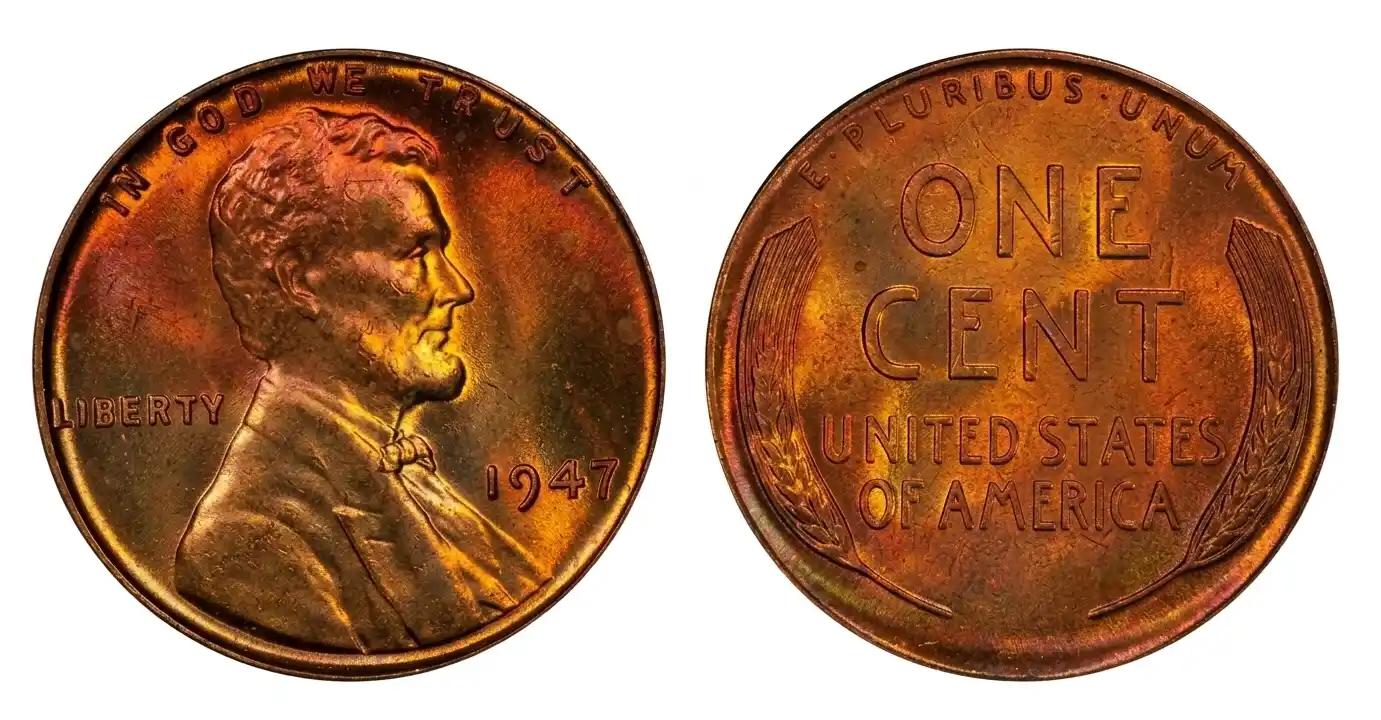
Copper oxidation levels serve as the primary factor for determining final sale amounts.
Environmental exposure changes the visual appearance of the metal over time.
Professional grading services like the coin appraisal app utilize three main designations for copper units.
Red RD
This category identifies coins maintaining more than 95 percent of the original mint color.
Investors prioritize these examples for their visual appeal.
Price gaps can reach 400 percent when comparing Red units to Brown units in the same grade.
Red-Brown RB
This class includes coins showing between 5 and 95 percent of the original luster.
Remaining surfaces display signs of darkening or developing patina.
Value for these pieces stays in a moderate range.
Brown BN
Brown coins possess less than 5 percent of the original copper color.
Circulated pieces typically fall into this category.
Worth for these specimens rarely exceeds the base metal value.
Manufacturing Errors and Unique Deviations
Verified factory mistakes significantly increase the worth of any 1947 penny.
Professional certification confirms the authenticity of these mechanical anomalies.
Doubled Die Obverse
This error happens during the die creation process when the hub strikes the working die twice.
Doubling appears visible on the lettering of the motto and the date digits.
A specimen exhibiting this error in MS65 condition maintains a value of $115.
Re-punched Mint Mark
Engravers manually punching the mint mark into the die sometimes created a second impression.
A visible secondary outline of the D or S letter indicates this variety.
Collectors pay a premium of $45 for this specific mistake.
Off-Center Striking Errors
Improper planchet feeding into the press causes a partial design transfer.
Value depends heavily on the percentage of the missing image.
10 percent shift → $25 value
50 percent shift → $140 value
Clipped Planchet
Metal strip feeding errors during the blanking process result in incomplete circular shapes.
A curved missing section confirms the origin of the mistake.
Prices for verified clips range from $35 to $85.
Die Cracks and Breaks
Worn dies cracking under pressure leave raised lines of metal on the coin surface.
Large cracks spanning across the design increase the auction interest.
Significant die breaks add approximately $20 to the base price.
Post-War Industrial Manufacturing Procedures
Production in 1947 followed the return to standard metallurgical practices.
Facilities restored the use of copper after the temporary shift to steel in 1943.
The process involved several sequential stages of raw material processing.
Ingot preparation → Strip rolling → Blanking → Annealing
Annealing the planchets softened the metal before the die impact.
This step ensured deep penetration of the design elements into the copper.
Laboratories monitored the purity of the metal batches.
Excessive impurities resulted in the immediate rejection of the entire metal lot.
Professional Grading and Preservation Methods
Using plastic holders prevents further oxidation of the copper surfaces.
Grading companies like Free Coin App provide a 70 point scale for assessing quality.
Total populations for 1947 units show the following distribution.
Grade MS65 → 8,400 units
Grade MS66 → 3,100 units
Grade MS67 → 420 units
Grade MS68 → 2 units
Extreme rarity in the highest grades drives competition during public sales.
Certification increases the overall liquidity of the asset by 35 percent.
Historical Context and Circulation Conditions
The American economy in 1947 showed growth following the end of global conflict.
Increased demand for small denominations required maximum facility operation.
Rapid money circulation caused significant wear on most 1947 strikes.
Finding uncirculated examples in common change remains impossible.
Most circulating pieces fall into grades below XF40.
Average worth for a worn coin sits at $0.10.
Market Stability and Long-Term Projections
The 1947 penny functions as a reliable asset for capital preservation.
Multi-year statistics confirm the lack of sharp price drops for this issue.
Investors track the global trends of copper pricing on major exchanges.
Large dealers continue absorbing high quality specimens from the market.
Available Red category units decrease at an estimated rate of 4 percent annually.
This scarcity creates a foundation for future price increases.
Demand for verified mint errors remains consistently high across all auctions.
Guidelines for Proper Metal Storage
Copper items require protection from atmospheric humidity and heat.
Oxygen and moisture trigger chemical reactions leading to surface corrosion.
Maintaining the original color requires following specific rules.
No direct sunlight exposure
Moisture level control
Non-reactive storage holders
Temperature stability
Specialized albums prevent the development of dark spots on the rim.
Storage in safes with dehumidifiers guarantees the preservation of mint frost.
Skin contact leaves oils damaging the copper surface permanently.